24 September 2026·10 min read
How to clean rugs at home: wool, jute, shag and outdoor washing
EnglishSuomeksi
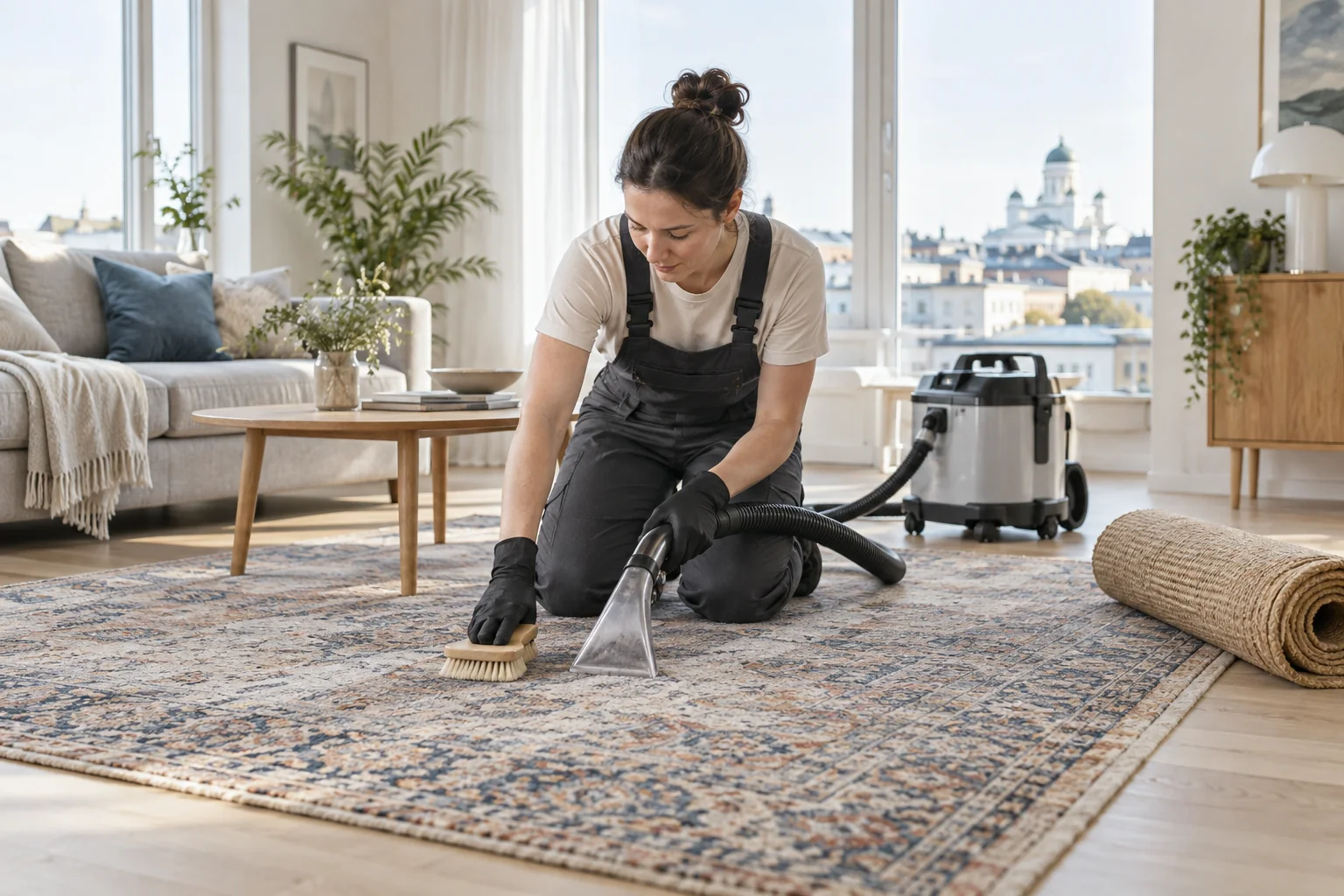
A rug can look sturdy and still react badly to water, heat or the wrong detergent. The reliable approach is to identify the material first, test a hidden area and plan the drying before washing begins.
This guide covers routine care, spot cleaning and full washing for common rug types in Finnish homes. If the label conflicts with general advice, follow the manufacturer’s instructions.
| Rug type | Safer method | Main risk |
|---|---|---|
| Wool and oriental rugs | Cool water, pH-neutral wool detergent, gentle pressure and flat drying | Colour bleeding, felting and distortion |
| Jute, sisal and paper yarn | Regular vacuuming and minimal-moisture spot cleaning | Shrinkage, browning and water marks |
| Shag and tufted rugs | Low-moisture extraction if the label permits, followed by fast drying | Moisture trapped in the pile or backing |
| Cotton, rag and washable synthetic rugs | Gentle wash according to the label, thorough rinsing and even drying | Shrinkage, fading and uneven shape |
A material-specific, low-foaming detergent is the safest starting point. Dish soap can leave sticky residue, baking soda is difficult to remove from dense pile, and acidic solutions may affect dyes or fibres. Avoid mixing cleaning chemicals. When trying any product, test a small hidden area first.
Use a designated washing place where dirty water is collected or directed to wastewater treatment. Do not wash a rug directly in a lake or the sea: detergent, dirt, fibres and other residues can burden the water. Helsinki is moving towards land-based, drained rug-washing sites for this reason; check your municipality’s current locations and rules before visiting.
Choose a dry, breezy day and bring the rug home only after excess water has been removed. If the water at an outdoor site has an algal bloom or an unusual smell, do not use it for washing.
Cold, clean snow can be used to freshen a colourfast rug after it has acclimatised outdoors, but it does not replace stain treatment or a proper wash when the rug is greasy or deeply soiled.
Work from the outside of the stain towards its centre. If the mark is old, the dye is moving or the rug is valuable, stop before repeated treatments make the damage harder to reverse.
A textile extractor can be useful on compatible synthetic or tufted rugs because it applies and removes solution in a controlled way. Make several dry extraction passes and provide strong airflow afterwards.
A steam cleaner introduces heat and moisture that may affect wool, natural fibres, adhesives and dyes. A pressure washer can stretch fibres and damage the backing. Use either only when the manufacturer specifically allows it.
The common “wet rug” smell usually comes from moisture trapped inside the pile or backing. Remove as much water as possible, dry the rug flat, open windows when weather allows and use a fan or dehumidifier. Avoid folding, rolling or hanging a heavy saturated rug from one edge.
For qualifying household work carried out in your home, part of the labour cost may be eligible for Finland’s household-expense tax credit. Eligibility depends on the service, location and invoice, so confirm the current conditions with the Finnish Tax Administration.
Only if the care label allows wet cleaning. Use cool water, a pH-neutral wool detergent and very little agitation. Test a hidden area first and dry the rug flat and quickly. Hand-knotted, antique or colour-bleeding rugs are safer with a specialist.
Natural plant fibres can shrink, brown or lose shape when soaked. Vacuum them regularly and blot small spills with minimal moisture. For broad staining, ask a professional for a low-moisture method.
A musty smell usually means the backing or inner fibres stayed damp too long. Improve airflow, use a fan or dehumidifier and keep the rug flat until it is dry through the full thickness.
High pressure can stretch fibres, damage backing and push dirt deeper. Unless the manufacturer expressly permits it, a controlled hand wash or extraction method is safer.
Homora can help you choose a suitable cleaning method and arrange carpet cleaning in Helsinki, Espoo, Vantaa and Kauniainen.
Explore carpet cleaning →